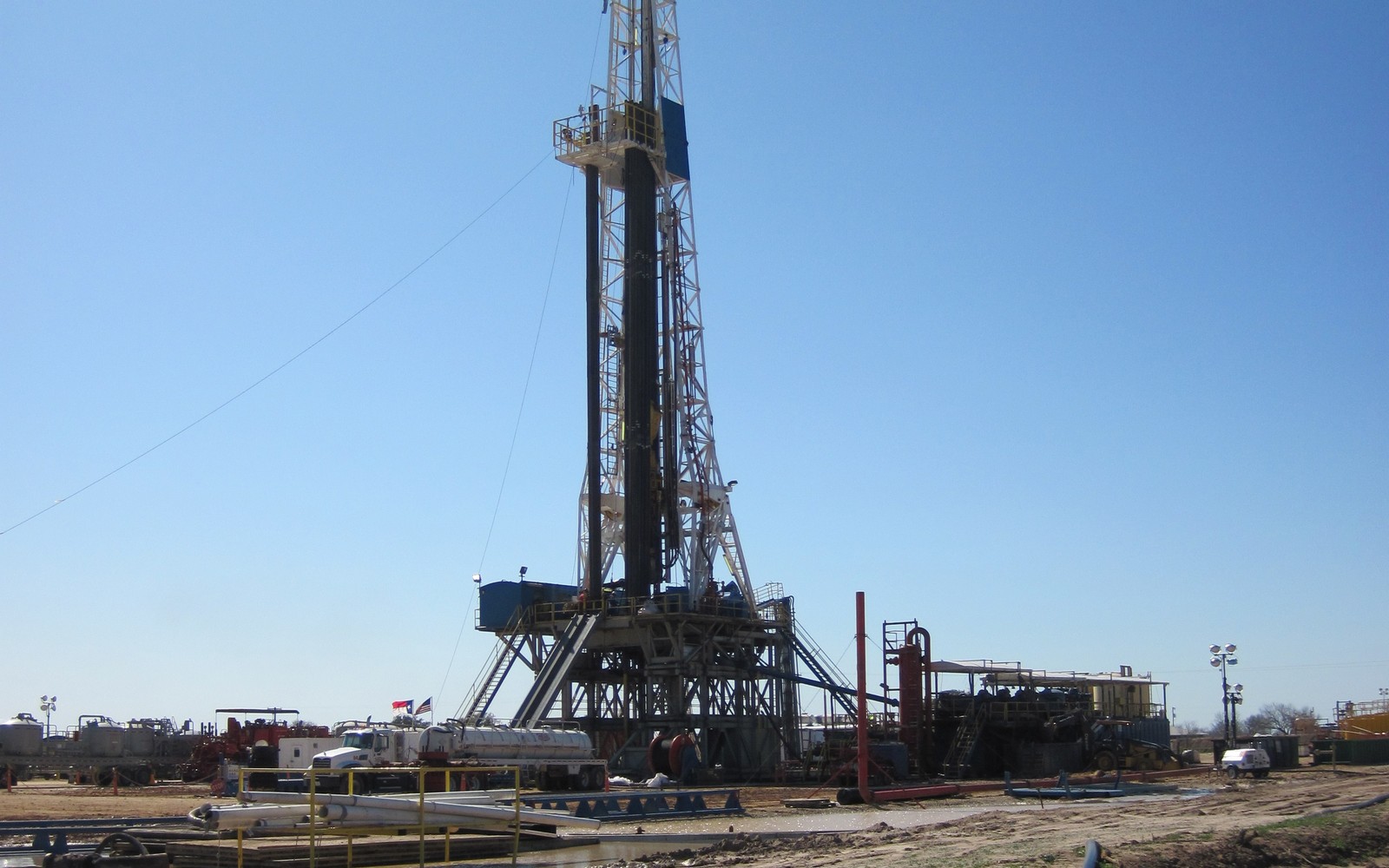
Haynesville Shale Mineral Rights
The tract desk explains how Haynesville Shale mineral rights in Panola, Harrison, and Shelby counties get underwritten against gas price cycles.
The Eagle Ford was one of the first shale plays the tract desk worked as an engineer, and its biggest quirk is still the thing most owners get wrong: it isn't one play, it's three.
The Eagle Ford runs in a band across South Texas, and the fluid it produces changes as you move from northwest to southeast, from an oil window through a condensate-rich middle to a dry gas window near the coast. Karnes, DeWitt, and Gonzales counties sit largely in the oil and condensate windows, while parts of La Salle and McMullen shift toward gas. That distinction drives most of the tract desk's underwriting on any Eagle Ford tract.
This is also a more mature play than the Permian in terms of drilling history. A lot of Eagle Ford acreage was drilled hard from roughly 2010 through 2015, so many owners here already have years of decline curve to look at rather than a pure projection. That production history is one of the more useful things the tract desk can work with.
Oil-window acreage in counties like Karnes and DeWitt has historically carried strong economics because operators are selling crude alongside associated gas and natural gas liquids, giving the well multiple revenue streams. Condensate-window acreage in the middle of the play captures some of that same multi-stream benefit with a lighter, higher-value liquid.
Dry gas acreage toward the southeastern edge of the trend is priced almost entirely on gas economics, which means its value moves more directly with gas prices and pipeline takeaway capacity in that part of the state. The tract desk treats that as a distinctly different underwriting exercise than an oil-window tract even within the same broader play.
Because so much of the Eagle Ford was drilled early with completion techniques that have since improved, operators in some areas have gone back and refracked existing wells, or drilled infill wells using tighter, more modern spacing and longer laterals than the original wave. That second round of activity can add real value to minerals that owners assumed were already fully developed and declining.
When the tract desk underwrites a tract with older production, it checks whether the operator has done any recent refrac or infill work nearby, because that changes the decline assumption significantly compared to a well left untouched since its original completion.
Given the play's maturity, the tract desk put more weight on actual check history here than it does on newer plays. Two years of statements tells the tract desk the real decline rate on your specific wells, which is far more reliable than a type curve pulled from a different part of the trend.
The tract desk also asks which county and roughly which part of it, oil, condensate, or gas window, because that single detail reshapes the entire pricing conversation before it has even looked at a division order.
Because much of the Eagle Ford was leased and drilled during a fast-moving development period, a lot of tracts ended up pooled into larger units with acreage from multiple original leases, sometimes drawn together to accommodate longer laterals than any single lease could support on its own. That pooling affects how your specific decimal interest is calculated relative to the unit as a whole.
The tract desk pulls the pooling or unitization documents when they exist, since the allocation formula used to combine multiple tracts into one unit can be more involved than a simple acreage ratio, and getting that math wrong changes the number in either direction.
Texas owner file
Resolve these owner questions before a Texas mineral purchase is reduced to a single dollars-per-acre number.
Considerably. Oil and condensate window production carries different revenue mechanics than dry gas, and the tract desk prices each differently based on the fluid mix, current commodity pricing, and takeaway capacity in that specific part of the play.
Mature production still has value, and in some areas operators have gone back with refracs or infill wells that add life to older acreage. The tract desk looks at recent activity nearby, not only the age of the original completion.
Twelve to twenty-four months of check detail is usually enough to establish a reliable decline trend, though the tract desk will take whatever history you have and work with offset data to fill in the gaps.
It varies by location within the county since McMullen straddles part of the transition zone. The tract desk checks the specific section and recent well data rather than assuming based on the county name alone.
It can, since your decimal interest depends on the allocation formula used to combine tracts into the unit, and not only your raw acreage. The tract desk reviews the actual pooling documentation before confirming your net interest.
Texas tract board
The same county record, lease position, and production history carry into these Texas property checks.
The tract desk explains how Haynesville Shale mineral rights in Panola, Harrison, and Shelby counties get underwritten against gas price cycles.
How the tract desk prices Midland Basin mineral rights across Midland, Martin, Howard, and Glasscock counties before making an offer.
The tract desk explains how Permian Basin mineral rights actually get priced, county by county, before you take a mailbox offer at face value.
Buy Mineral Rights Texas
Send the county, property description, producing status, operator or well name, and the documents already available.
Notifications