Sell Mineral Rights in Rankin, TX
Rankin is the county seat of Upton County, squarely in the Permian Midland Basin. The tract desk underwrites Wolfcamp and Spraberry interests here off real decline data, not rules.
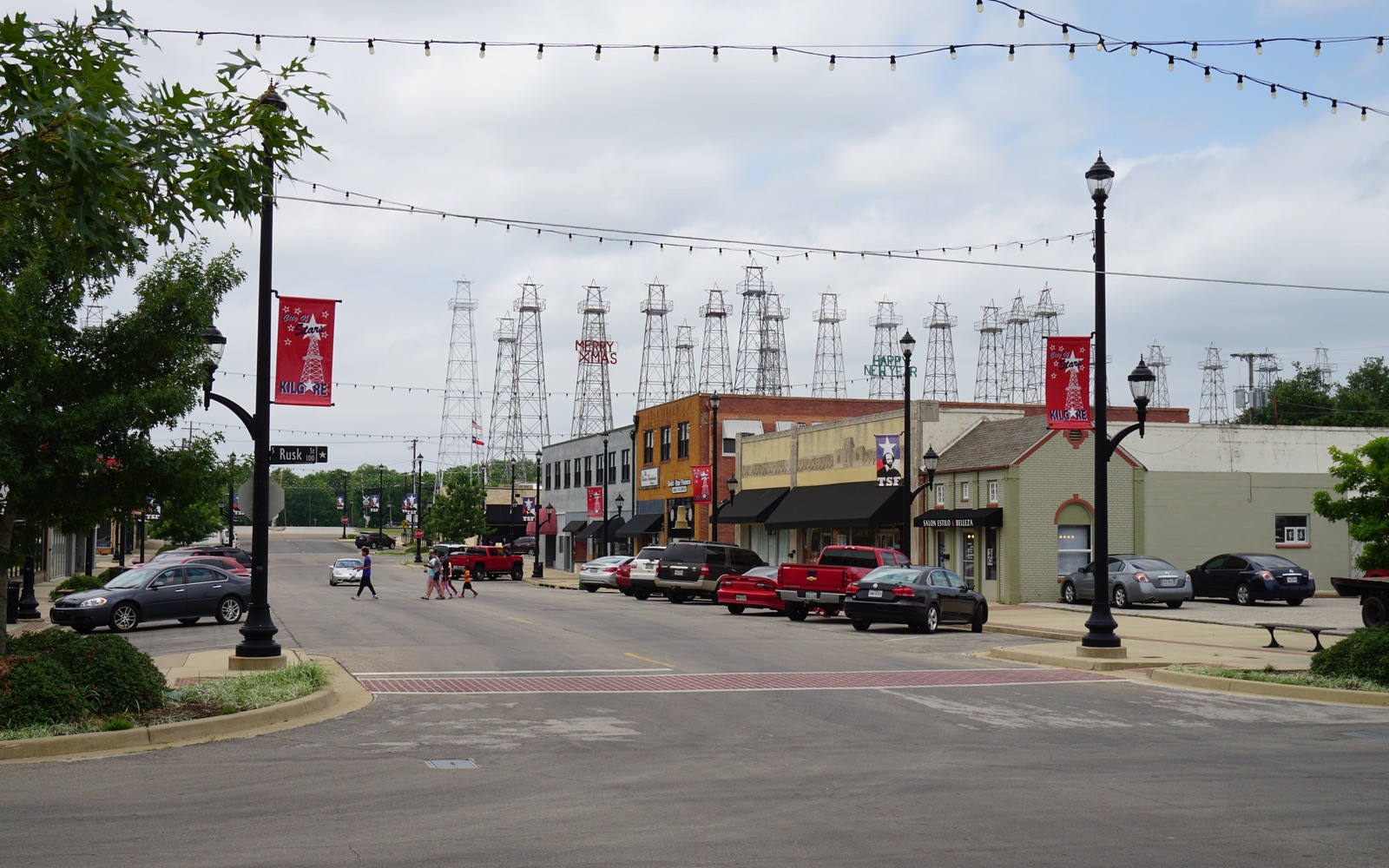
Kilgore sits over some of the oldest continuously producing ground in Texas, where the legacy East Texas Field overlaps with newer Haynesville-related gas activity at depth.
Few places in Texas have as many decades of overlapping production history as Kilgore, so when the tract desk looks at an interest here it is often untangling a shallow legacy oil well, a deeper gas zone, and sometimes a modern horizontal, all on the same tract.
The tract desk also checks whether any recent workover or recompletion activity has touched the shallow legacy zone, since that can quietly add years to a tract that looks fully depleted on paper.
The East Texas Field's original shallow oil sands are still producing on some tracts around Kilgore nearly a century after discovery, while deeper Haynesville-related gas development has added a second, more recent revenue stream on others. The tract desk separates these out rather than treating your interest as a single well.
Interests this old have frequently changed hands through multiple estates, and it's common for the division order on file to reflect an ownership structure that's a generation or two behind the current heirs. The tract desk helps reconcile that as part of the underwriting, not after we've agreed on a price.
Interests this old sometimes carry decimal figures based on an ownership structure from decades ago, before later estates split the interest further among today's heirs.
The tract desk reconcile the current division order against probate and deed records to confirm what your actual current share is before pricing an offer.
Every review begins with the county record, legal description, ownership fraction, lease position, producing status, wells, units, and paid decimal. Surface location can help find a tract, but it does not prove the mineral interest or participation in nearby development.
Formation, field, well vintages, spacing, operator acreage, offsets, permits, and development pace around a subject tract belong in separate evidence lanes. The property's own history carries more weight than activity that does not include the acreage.
Statements, division orders, unit records, volumes, prices, taxes, deductions, downtime, adjustments, burdens, and decimal changes should reconcile before current revenue or remaining production is projected for the tract.
The written purchase file should identify the right conveyed, county, legal description, fractions or acres, depths, products, wells, units, reservations, effective date, receivables, title standard, adjustment rights, funding, and recording sequence.
Texas owner file
Resolve these owner questions before a Texas mineral purchase is reduced to a single dollars-per-acre number.
Age alone doesn't determine value — a century-old East Texas Field well can still be worth buying if it's producing steadily, even at modest volumes.
Yes, this is common in Kilgore. The tract desk will help trace the ownership chain through probate and county records as part of the process.
In many cases yes — deeper Haynesville-related gas activity has added a second producing zone on some tracts beyond the legacy shallow oil sands.
Yes, workovers and recompletions on old shallow wells do happen and can extend productive life meaningfully.
That's common on older interests. The tract desk will help trace the current ownership through probate records as part of the review.
Texas tract board
The same county record, lease position, and production history carry into these Texas property checks.
Rankin is the county seat of Upton County, squarely in the Permian Midland Basin. The tract desk underwrites Wolfcamp and Spraberry interests here off real decline data, not rules.
Pecan Acres is an unincorporated Tarrant County community over mature Barnett Shale gas. We buy mineral interests directly and underwrite off real well data.
Rendon sits in southeast Tarrant County, core Barnett Shale ground with a long production history. The tract desk underwrites these interests off real decline data going back.
Buy Mineral Rights Texas
Send the county, property description, producing status, operator or well name, and the documents already available.
Notifications