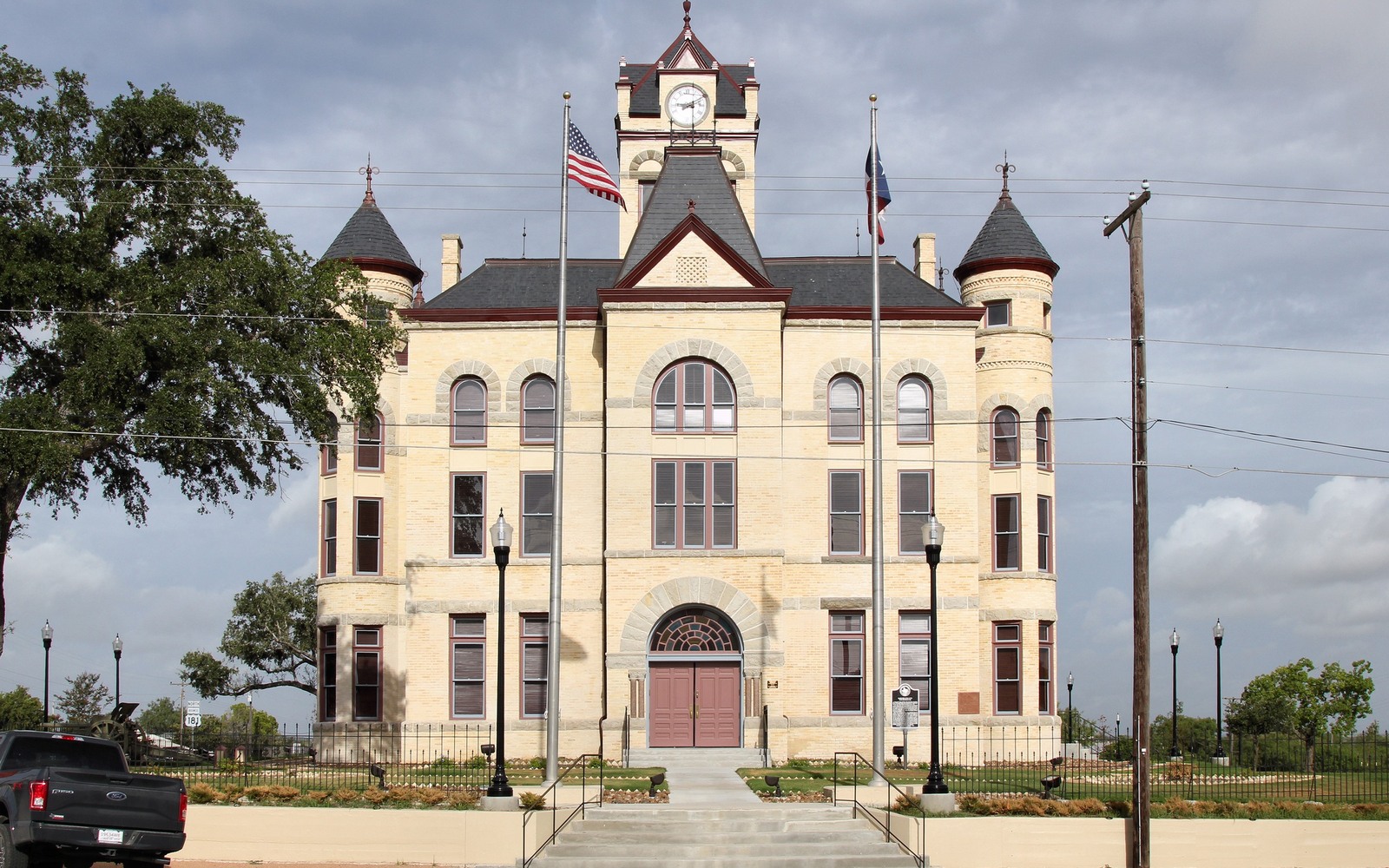
Sell Mineral Rights in DeWitt County, TX
DeWitt County produced some of the Eagle Ford's strongest oil-window wells. The tract desk underwrites tracts here against real production, well by well.
Karnes County was the proving ground for the Eagle Ford, and it's still one of the few counties in Texas where a decades-old lease can sit under a rig that spudded last quarter.
The tract desk spent enough years on the operations side to know that Karnes County doesn't behave like a typical Eagle Ford county. Pawnee, Karnes City, Kenedy, Falls City, Runge — every one of those areas has its own pressure regime, its own mix of oil and condensate, and its own operator history going back to the Eagleford discovery wells around 2008. When the tract desk looks at a Karnes County royalty deck, it is not applying one multiple to the whole county. The tract desk is pulling the unit, checking who operates it, and reading the last twelve months of production the way it used to read a well test.
If you own minerals or a royalty interest anywhere in Karnes County, chances are it traces back to a lease your family signed during the first wave, or an interest that came down through a will with several names still on it. Either way, before the tract desk put a number in front of you, it has already looked at your specific tract, not the county average.
Karnes County sits in the black-oil to volatile-oil window of the Eagle Ford, which is part of why operators kept coming back here after the 2015-16 downturn thinned out activity elsewhere in the play. The Austin Chalk overlying the shale adds a second productive zone in parts of the county, and some of the more interesting Karnes County deals the tract desk has reviewed involve co-development of both formations under the same unit — which changes how you should think about your royalty stream, because you may be getting paid off two stacked completions instead of one.
The county has also seen real refracturing and infill activity on older units, which matters more than most sellers realize. A well that looked tired in 2019 can post a meaningful production bump after a nearby infill pad goes online, and that bump shows up in your monthly check before it shows up in any public database. When the tract desk underwrites a Karnes County interest, it is checking the Railroad Commission permit activity in the surrounding sections, beyond the historical decline on your existing wells alone.
The first thing the tract desk looks at is whether the interest is held by production across multiple units or tied to a single well. County-wide interests that stack across several Eagle Ford units tend to smooth out the volatility of any one well's decline, and that changes the underwriting math versus a single-well royalty that's three years past its peak.
Second, the tract desk checks the operator. Karnes County has seen a fair amount of asset trading over the years, so the company on your check stub today may not be the one that drilled the original well. That matters for how quickly you get paid, how the division order was handled, and whether there's a backlog of suspended funds tied to a title issue nobody's cleared up.
Third, the tract desk looks at whether you're getting paid on oil, gas, and NGLs, or just one stream. Karnes County wells often produce a rich mix, and a statement that only shows oil revenue while gas and plant products go unaccounted for is a red flag worth chasing down before you sell, because it can mean real money sitting in suspense.
A meaningful share of the Karnes County mineral base was severed decades before the shale boom, split among heirs of ranching families going back generations. It's common for the tract desk to see an interest where the decimal on the division order is a fraction of a fraction — 1/8th of a 1/6th passed down from a great-grandparent's estate — and where some of the co-owners have never been located by the operator.
If your interest has never been formally probated, or if there are unlocated heirs on the same tract, that's not a deal-killer, but it does slow down the closing and it's something the tract desk flags early rather than after we've agreed on a number. The tract desk has closed plenty of Karnes County deals where the title work took longer than the negotiation.
To give you a serious number rather than a guess, the tract desk wants your most recent check stubs (ideally 12-24 months), your division order if you have it, and the legal description of the tract if you know it — abstract number, survey, or the property ID from your county appraisal district. If all you have is an old lease and a general sense of where the land sits in Karnes County, that's still enough for the tract desk to start pulling well data.
The tract desk does not charge for the review, and it is not going to string you along with a lowball number to see if you'll take it. If the well activity around your tract doesn't support a strong offer, the tract desk will tell you that directly and explain why.
Texas owner file
Resolve these owner questions before a Texas mineral purchase is reduced to a single dollars-per-acre number.
Yes. Pawnee and the area around Karnes City sit in a different part of the pressure and fluid window than the eastern edge of the county near Kenedy, and operator activity isn't uniform across the county. The tract desk underwrites by section and unit, not by county average.
Not directly, as long as the interest is currently held by production or you retain a valid mineral or royalty interest under it. What matters more is the current well activity and the decimal interest, not the age of the original lease.
You can sell your own share independently in most cases. The tract desk will work with whichever heirs want to sell and explain the process so the ones who aren't ready aren't pressured — but it does need clean or reasonably clear title on the interest being sold.
Once the tract desk has a division order or a legal description and can confirm the interest, most straightforward Karnes County closings run three to five weeks, mostly driven by title work and payor paperwork rather than anything on its end.
Yes, both, and the tract desk underwrites them differently — a mineral interest carries executive rights and future lease potential, while a royalty interest is a pure production stream. The tract desk will tell you which one you actually hold if you're not sure.
Texas tract board
The same county record, lease position, and production history carry into these Texas property checks.
DeWitt County produced some of the Eagle Ford's strongest oil-window wells. The tract desk underwrites tracts here against real production, well by well.
We buy La Salle County mineral and royalty interests in the Eagle Ford condensate and dry-gas window, underwritten well-by-well around Cotulla and Encinal.
We buy mineral and royalty interests across Panola County, TX, a core Haynesville shale gas county. See how deep gas wells get underwritten before an offer.
Buy Mineral Rights Texas
Send the county, property description, producing status, operator or well name, and the documents already available.
Notifications